Boundaries and Self Worth

house construction


My support group recently watched a video that featured, along with some weird-looking zombies, the importance of creating boundaries.

The point of this video (see below) is that the way we see ourselves can determine how well we are able to enforce our personal boundaries. If you see yourself as a beautiful mansion that has been maintained well, you will want to put up a secure fence to keep your mansion house safe.

On the other hand, if you’ve abandoned your house and left it in disarray for a while, you might not feel the need for a strong fence or any fence at all to protect your house. I think living with an addict year after year can do a lot of damage to our personal houses that are built in our hearts. I have to admit, there have been times in my life when I felt like my house, (or me), was in a neglected state and in need of repair. When I viewed the abandoned house depicted in the video, I felt sad because I could relate to the feeling of being that kind of house.

Fortunately, I’m a good fixer-upper and I have spent periods of time here and there for house-cleaning, repairing, and sprucing up my house-self. I count this as a gift from God. I didn’t discover my husband’s addiction until decades into our marriage and I often wondered why God hid these secrets from me. I may never know the answers for sure, but I can now see this as a huge blessing because God gave me time to really work at fixing up my house. I didn’t end up with a mansion, but I feel my foundation has always been solid and my framework is sturdy and reliable. You see, I’ve never doubted that I am a daughter of God and that He loves me. My foundation is built on that testimony. The knowledge that I have divine worth, has helped me keep my house in good condition, but it has taken years of work to get to that point.

So, when it was time for me to create personal boundaries, I was blessed with some good building material from my fixer-upper house inside my heart. There was just enough left in my house to build my safety fence. In fact, some of my first attempts at fence-building probably ended up looking more like a brick wall with razor wire on the top instead of a boundary fence! I may have made a few ultimatums, but they worked for me until I figured out a better approach.

Betrayed wives are often counseled to create boundaries right away. I think an important step is missed in such counsel. I think betrayed wives must first learn to love themselves and discover their true value. I believe this comes from relying on God and believing that He values us as His children.  When we believe in our own self worth, we understand the need for protecting ourselves, the houses for our souls, from behaviors that show no respect for our true value.

In the end, loving yourself is not about tooting your own horn or conforming to the world’s view of self-esteem. It’s about being who you are—a unique child of God—and knowing that who you are is a good thing. When you understand your eternal worth and you live in a way consistent with your divine heritage, you will gain a lasting self-esteem that is better than anything the world can offer (Truth, Lies, and Your Self-Worth, By Mindy Raye Friedman, New Era, Jan. 2014).

A strong sense of our eternal worth is the best thing to keep the homes in our souls, our heart houses, beautiful and strong.  I once took a white board marker and wrote on my mirror, “You are a daughter of God.” I left that message on the mirror and daily repeated the words until I felt like I regained my sense of worth. Regardless of our circumstances, our mistakes, or our moments of faltering faith, we are daughters of God and we deserve houses that are safe.
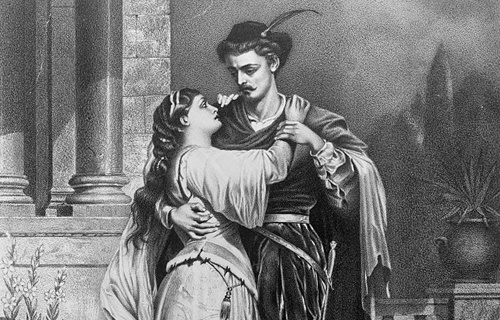

 

What’s in a Name?

Juliet:
“What’s in a name? That which we call a rose
By any other name would smell as sweet.”

romeo-and-juliet
Romeo and Juliet (picture found on Shakespearequotesandplays.com)

Shakespeare nailed it. It doesn’t really matter what we call ourselves. It’s the person we are and not our name that defines us.

I have a real name and it’s not Avalon Vic. I bought some lotion at a boutique and it had the name “Avalon” on the bottle. I liked the lotion and I liked the name. When I looked up the meaning for “Avalon” I found the following:

Urban Dictionary: Avalon is derived from the welsh name “afal”; often associated with the island that King Arther’s sword Caliburn was forged. The island of Avalon is also often associated with an island that yields beautiful apples. The name “Avalon” as used in the context of a feminine name, describes one who possesses beauty unrivaled by any other. In the modern context, those who possess the name Avalon are seen as ‘One who is as rare as the legendary sword forged for a king Arther’, thus, “Avalon” is one of a kind- a woman .

I also like the name, Vic. It sounds strong and reminds me that I can be the victor over the trauma of betrayal.

Though I think my pretend name is pretty, anonymity is not. In fact, anonymity stinks. It limits how I tell my stories. Sometimes I feel like I’m split into two people: the real me and this other “Avalon Vic” person. So, why do I, and so many other women, choose pseudonyms for our blogs?

For me, anonymity helps limit the number of people involved in my husband’s recovery efforts and my healing. I love my ward members and neighbors, but sorting out the messiness of betrayal, addiction, trauma, and everything else, . . . well . . . it is something that the two of us need to do without too much outside help. We get plenty of assistance from professional therapists, church leaders, and therapy group members and they are the only ones, beyond our immediate family and one close friend, that knows about us.

Anonymity protects me from the ignorance of others. It’s been almost two years since D-day and I’m still not ready to hear the ignorant remark, “If she had only taken care of her husband’s needs, this wouldn’t have happened.”  It may be unwarranted, but it’s a fear I have. My husband is popular and he knows a lot of people. Most people would never believe he is capable of doing what he did, so I assume they will simply blame me, the less-known and more reserved one in our relationship.

Having my husband’s Priesthood blessings restored is very important to me and my extended family. I feel safe keeping our story under wraps until those blessings are restored. And then . . .

And then, I hope to have Avalon Vic merge with the real me. I hope I can be brave, come out of hiding, and tell the world that sex addiction is real and it’s spreading like a plague. There is so much more to me than this pornographic sex and lust crap. The reality is, I may have to join the fight against porn, despite my desire to rid myself of everything associated with it and never look back. I don’t know what the Lord has in store for me. ME. Not Avalon Vic. But I do know that the time will come when Avalon Vic will fade away and the real me will emerge as one person . . .  with one name.


Looking for Solid Narrative Ground

I’ve been robbed of my story.

I’ve always seen my life as a series of stories that collectively created the big story – my life. And now . . . I’m not sure how to find my stories. They don’t look the same anymore. They are tainted and tarnished. My life story has been stolen.


My married life story began when I was sealed for time and eternity to the man I adored. I prayed and prayed about my decision to marry. I never felt so confident about anything in my life. He was the guy for me. I had no doubts.

bcf32111616a79b076f49c0e264654c3

My husband was a returned missionary and a natural leader. Even before we were married, he spent a great deal of time fulfilling church callings and assignments. I knew before I married him, that he would always be busy in the church. And he was! He was in numerous church leadership positions. The good saints that he served loved him. He gave his all. Nothing was too good for the Lord. His church obligations often left me at home alone with the kids, but I knew that we would be blessed as a family as we both faithfully served.

People often complimented us. “You guys are such a cute couple!” “You have such a neat family.” “You are so lucky!” We certainly seemed to be the family that had everything together. By all appearances, our marriage was everything it should be. My husband opened my car door, bought me flowers, washed dishes, and treated me with kindness. We were happy. We laughed together and sometimes we cried together. We fought through financial difficulties and the loss of loved ones. We were asked to share our successful marriage tips with others at firesides and Relief Society meetings. We shared our life stories with humor and spiritual strength. We prayed together. We attended the temple together. We listened to scriptures together. We weren’t perfect, but I thought we had an excellent marriage relationship.

That’s my “before” story. D-day changed everything. And now, when I look at family photos and recall happy memories, there is another story that is running in the background. The other story is full of deceit and betrayal. It’s black tendrils slowly creep to the surface until all my stories are clouded and distorted.

Being robbed of knowing my past as I used to know it, is a painful thing. Equally painful is not being able to trust the story of my future. Nobody can predict the outcome of their life story, but in the past I felt that I could rely on the strength of my marriage to get through whatever life threw at me. I anticipated joys, hardships, achievements, struggles, and everything else typical in life. The starting point for all my stories would be my eternal marriage and family. My eternal marriage would be the one thing that could hold all the other story lines together. Now, I must find new solid narrative ground to begin my stories. This is a heavy loss and it makes me grieve.

“Moving forward in life is hard or even, at times impossible, without owning a narrative of one’s past. Isak Dinesan has been quoted as saying ‘all sorrows can be borne if you put them in a story or tell a story about them.’ Perhaps robbing someone of his or her story is the greatest betrayal of all” (Fels, Anna. “Great Betrayals.” New York Times. Oct. 5, 2013).